
Episode 7: Ganipitaka – The Treasure of Jain Scriptures
“Words may be limited, but the meanings and insights they carry are infinite.”This 15-minute visual may appear short, but the meanings and spiritual insights it offers are eternal and limitless. In this episode of Gagar Ma Sagar, we explore the profound subject of Ganipitaka. 🕉️ The Flow of Jain Scripture In Jain tradition, Shasan refers to the words and commands of the Tirthankara. This spiritual flow travels from: This is how the divine message is transmitted from the Enlightened One to the world. The sacred texts of Jainism have two main sources: Today’s focus is on Ganipitaka. 📚 What is Ganipitaka? The term Ganipitaka consists of two words: So, Ganipitaka means “the treasure of the Acharya’s knowledge.” Just as the lives of the Tirthankaras and Ganadharas are not myths but actual historical sequences, Ganipitaka too is not legend but a sequence of real spiritual development and composition. Every Tirthankara gives teachings to the Ganadharas. These Ganadharas compose the scriptural canon, known as the Dvadasanga Ganipitaka — “Dvadasa” means twelve, and “anga” means parts. So, Dvadasanga means the Twelvefold Canon. 🪔 The Twelve Angas (Sections) of the Ganipitaka Each time, the Ganadharas organize the teachings of the Tirthankaras into twelve sections, which are: These also exist in Prakrit names — such as Āyāro, Suyagado, Ṭhāṇam, Saṁvāo, etc. Most sutras are known by their Sanskrit names today, except two: Sūtrakṛtāṅga (Suyagadāṅga) and Antakṛddaśāh (Antagadadasāo), which are often referred to by their Prakrit titles. 📏 The Vastness of Knowledge To give an idea of the size and depth of these scriptures: A metaphor is given: Imagine a massive well with one crore (10 million) units. Now, fill it with ink and use that to write — only then would the entire knowledge of these scriptures be recorded. This shows how vast the knowledge preserved in these ancient texts truly is. 🙏 The Four Main Subjects Within Ganipitaka Ganipitaka covers four main themes across all twelve scriptures: 1. Dharmakathanuyoga – Spiritual Narratives These include meaningful life events (not full biographies) of: These stories inspire virtue, courage, and reflection. They ignite deep emotions and moral transformation. 2. Caranakaranuyoga – Conduct and Discipline This deals with: 3. Dravyanuyoga – Metaphysics and Science Covers elements of the universe: 4. Gaṇitānuyoga – Mathematics and Cosmology This is the most mathematical and scientific branch: 🔍 Why Aren’t Scriptures Categorized by Subject? Just as the human body cannot function with all muscles, nerves, or organs in one place, the scriptures also need a balanced integration of all topics across each section. Each scripture is like an organ, with all necessary components — thus, life-giving and complete in itself. 🧭 Confusion About Number of Scriptures Different Jain sects recognize different numbers of scriptures: This variation stems from a concept called Samācārī, which will be discussed in the next episode. 🧘 Conclusion Ganipitaka is not just a compilation of texts. It is a living legacy of divine knowledge, flowing from the omniscient Tirthankaras through generations of enlightened beings. Each of its twelve sections is a treasure trove that integrates: By understanding and respecting this integrated wisdom, we move closer to the soul’s liberation. Let us bow to the immense spiritual power and intellectual brilliance of the Ganadharas and their disciples, who preserved and passed down such vast, divine knowledge.
Episode 6 : Chaturvidh Sangh: The Four Pillars of Jain Dharma
In this vast universe, words may be limited—but their meanings and depth are infinite.This video is only 15 minutes long, yet the joy and knowledge it offers is eternal and boundless. 🕉 What Is the Chaturvidh Sangh? The third foundational pillar of Jain Dharma is the Chaturvidh Sangh (Fourfold Religious Order).This is symbolically illustrated through a unique and sacred diagram called the Anupurvi. 🔢 The Sacred Anupurvi The Anupurvi consists of 25 boxes, each numbered sequentially from 1 to 25.No matter which direction you count—horizontally, vertically, or diagonally—the total always equals 65, earning it the name “Pansathiyo Yantra” (65 Device). When the number 25 is reached, one recites: “Namo Sanghassa” — Salutations to the Sangh This symbolizes that after invoking the 24 Tirthankaras, reverence is given to the Sangh, which is considered worthy of veneration just like the Tirthankaras themselves. 📜 Reverence of the Sangh in Jain Scriptures One of the earliest authors of Jain scriptures, Devardhigani Shraman, began the Nandi Sutra by first praising Lord Mahavir.But what followed is extraordinary: he then composed elaborate praise for the Sangh—with poetic comparisons and deep emotion. Why so much reverence for the Sangh? Because the Sangh is established directly by the Tirthankaras. It serves as a refuge for souls burdened by worldly suffering, offering a path to liberation. 🧘♂️ The Four Parts of the Chaturvidh Sangh The Chaturvidh Sangh includes: All four members of the Sangh live with only one goal: liberation (moksha).Their every thought, word, and deed revolves around the soul (Atma), the Guru, and the Supreme Soul (Paramatma – Arihant and Siddha). Nothing else holds importance in their life. 🏛 The Leadership Hierarchy of the Sangh The head of the Sangh is always the Tirthankar Paramatma.After His nirvana, leadership passes to: Each step has a clearly defined role: Only those genuinely devoted to spiritual practice are granted entry into this Sangh. 🕊 How One Enters the Chaturvidh Sangh Whether one is renouncing the world (as a Sadhu/Sadhvi) or remaining in the household (as a Shravak/Shravika), entry into the Sangh begins with Samyak Darshan (Right Faith)—a deep conviction in the teachings of the Tirthankaras. One must approach the Sangh’s spiritual leaders and: This includes reciting the 5th Shraman Sutra, the Samyak Gun Dharna Sutra, which declares: “Namo Chauvīsāe Tithayaraṇam Usabhāi Mahāvīra Pajjavasaṇāṇam, Inameva Niggantham Pāvayaṇam Saccam Anuttaram.” (This path of the 24 Tirthankaras, ending with Mahavir, is the true and supreme one.) 🔍 Understanding Jain Ethics & Principles After entry, the Sadguru (true Guru) imparts deep knowledge of: Then, based on one’s capacity and intention, the Guru teaches: 🕯 Historical and Present-Day Sangh Every Tirthankara has established a Chaturvidh Sangh.For example: In modern times, the structure of Sanghs registered with charitable commissioners serves administrative and community purposes—like building temples or arranging services. But true spiritual entry into the Chaturvidh Sangh still requires personal surrender, devotion, and vows taken before a Sadguru. 🔚 Conclusion The Chaturvidh Sangh is the spiritual organization founded directly by the Tirthankaras, consisting of: Whether through renunciation or household devotion, all members of the Sangh share one focus: spiritual practice and liberation. It is the Sangh that preserves the living wisdom of the Tirthankaras, the guidance of the Gurus, and the sacred path of the soul.We offer infinite salutations to this divine and eternal Sangh: “Namo Sanghassa” – I bow with deep reverence to the Sangh.
Episode 5 : The Pillars of Jainism: The Divine Lives of the Ganadharas
In this vast world, words may be few—but their meanings are infinite.This video is just 15 minutes long, yet the joy and knowledge it provides are limitless and eternal. 🛕 The Origin of the Ganadharas Over 2,500 years ago, on the day of Vaishakh Sud Dasham, when Lord Mahavir attained Keval Gyan (omniscience), the gods arrived and celebrated this divine occasion. A Samavasaran (divine preaching assembly) was formed. However, because no human was present at that time, no one became a Sadhu (monk), Sadhvi (nun), Shravak (layman), or Shravika (laywoman).As a result, Lord Mahavir’s first sermon failed—no one heard it. The next day, on Vaishakh Sud Agiyaras, when the gods again played celestial drums and announced the divine event, people began gathering toward the Samavasaran. At that same moment, a wealthy man named Somil was conducting a Yajna (sacrificial ritual) with 4,400 Brahmins, including 11 extraordinarily intellectual Pandits, led by Indrabhuti Gautam. These scholars believed themselves to be all-knowing. They thought the gods descending from the heavens were coming to bless their Yajna—but they were wrong. The gods had gone to Lord Mahavir’s Samavasaran. When Somil learned this, he sent word to Indrabhuti Gautam. Curious, Indrabhuti personally visited the Samavasaran. The moment he stepped inside and witnessed the celestial grandeur and saw the serene face of Lord Mahavir adorned with divine attributes, his ego began to dissolve. Lord Mahavir lovingly welcomed him, saying: “Welcome, Indrabhuti Gautam.” Hearing his name from the Lord’s lips melted away Indrabhuti’s arrogance. Then Lord Mahavir said: “You have a doubt, don’t you? Whether the soul exists in this world or not?” With that one sentence, Indrabhuti’s ignorance, ego, and hesitation dissolved completely.He surrendered. Soon, all the other ten scholars followed him.Together with their 4,400 disciples, they all accepted Diksha (renunciation) from Lord Mahavir. 📜 The Formation of Jain Scriptures The gods gifted the new disciples monastic robes and sacred items. Lord Mahavir initiated them and gave them the vows of self-restraint. These first disciples sat before the Lord to listen to His sermons. He preached: “Upanneva, Vigameva, Dhuveva…”(“What arises, passes away, and what remains is eternal…”) This aligns with the scientific principle:“Energy cannot be created or destroyed; it only changes forms.” The Lord’s deeply meaningful teachings were then preserved by the Ganadharas (chief disciples). These teachings became the Dwadashangi Ganipitaka, later known as Agams (Jain scriptures). The Ganadharas organized Lord Mahavir’s divine words into Sutras, giving rise to the sacred texts of Jainism. Each Ganadhar created his own Vachana (style of interpretation), even though the meaning remained the same. Although Lord Mahavir had 11 Ganadharas, only 9 unique Vachanas were formed, as some Ganadharas shared identical expressions.Today, only the Vachana of Sudharma Swami survives, forming the basis of present-day Jain Agams. 🧘♂️ Who Were the Ganadharas? The Ganadharas were the first and closest disciples of a Tirthankara. They possessed: They organized the teachings into 12 Angas, including: Because of their deep knowledge and powers, they were also called Shrutkevalis—those with perfect scriptural knowledge. 🏹 The Karmic Bond of Ganadharas Just as a Tirthankara becomes enlightened due to Tirthankara Naam Karma, a Ganadhar too is born from the same karma, though with slightly lesser intensity. They also share a strong karmic bond (Runanubandh) with the Tirthankara from previous lives, which is why they become the first disciple. In total, across the 24 Tirthankaras: At present, in the Mahavideh Kshetra, where Tirthankaras are eternally present, Ganadharas also remain constantly. 🔚 Conclusion The Ganadharas are the first and foremost disciples of the Tirthankaras.They uphold the teachings, preserve the scriptures (Ganipitaka), and guide the community of monks, nuns, and householders. They are known as Gan-dharas because they “Dharan (uphold) the Gan (community).”They convert divine sermons into scripture and carry forward the spiritual stream of the Lord’s wisdom.With infinite reverence, we bow at the divine feet of these Ganadhar Bhagwants—the eternal pillars of Jain Dharma.
Episode 4 : Tirthankaras: The Eternal Pillars of Jain Dharma
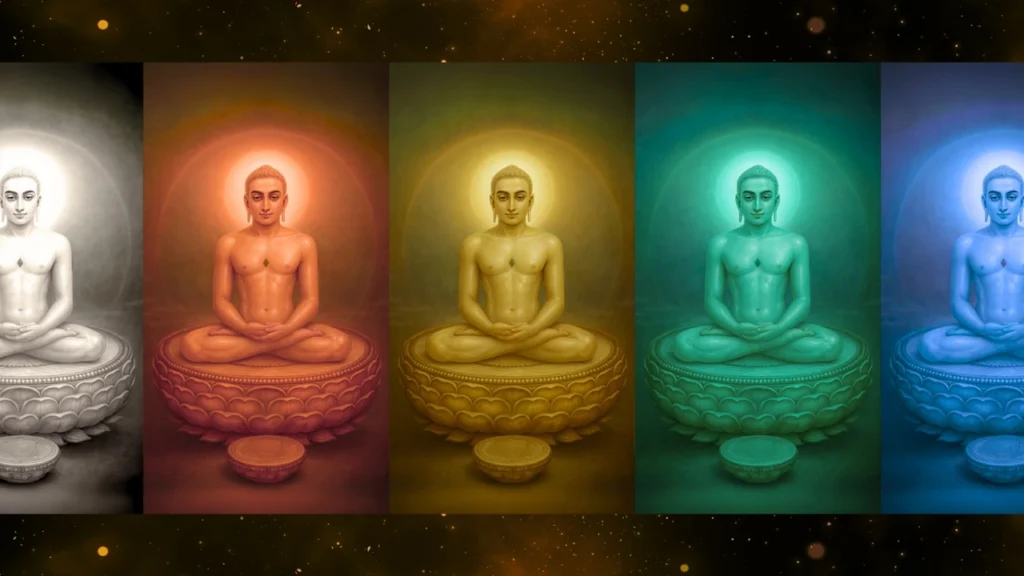
In this vast world, words may be limited, but their meanings are infinite.This video may be just fifteen minutes long, yet it holds boundless and eternal wisdom — truly an ocean in a droplet. This is Episode 4 of “Gagar Ma Sagar” — focused on the foundational pillar of Jain Dharma: the Tirthankara. The name of a Tirthankara itself contains immense spiritual power.Just as the sun burns tirelessly across ages, without distinguishing between night or day, to sustain life on Earth —So too does the enlightened soul, having undergone infinite spiritual heat (tapas), shine with compassion and divinity for the salvation of the world. Even if countless suns came together, their efforts would still fall short of what one Tirthankara does for universal upliftment.A Tirthankara is one who not only crosses the ocean of worldly existence but also establishes the path (Tirtha) for others to do so.Thus, in the sacred Navkar Mantra, the very first obeisance is: “Namo Arihantanam” — salutation to the Arihants, the Tirthankaras. How Does One Become a Tirthankara? Tirthankaras, in their infinite past lives, were ordinary souls like us — entangled in the endless cycle of birth and death.But at some point, their spiritual effort awakens. They receive satsang, selfless service opportunities, and a human birth — all of which they embrace with deep devotion.They begin to shed bodily attachments and cultivate the right view (Samyak Darshan) and right faith. Over several lives, their spiritual intensity increases. Eventually, they reach a life where they perform “vish-sthanak aaradhana” — worship of the twenty spiritual stages necessary to acquire Tirthankara Naam Karma (the karma that causes one to be born as a Tirthankara). This includes: All with the single noble intention: “May all souls attain liberation.” Through this, they earn the most supreme karmic bond: Tirthankara Naam Karma. The Journey of a Tirthankara’s Soul After earning this karma, the soul takes birth in the celestial realms.Once that life ends, the Tirthankara Naam Karma becomes active. At conception, the mother sees 14 auspicious dreams, and the gods celebrate the moment of “Chyavan Kalyanak” (descent of the soul into the womb). Even the infernal realms are illuminated at that moment. When a soul asks why there is sudden light in hell, another replies, “A Tirthankara has either descended, been born, attained omniscience, or attained liberation.” After 9.5 months, the divine birth occurs. The Indra of the first heavenly realm descends to Meru Parvat or Vaibhavgiri to perform the sacred birth rituals.The body of the newborn is flawless — shining like a pearl. Even their blood is pure white, as described when Lord Mahavira’s foot bled milk after a snakebite — symbolic of his divine body. The moment a Tirthankara is born, disease and negativity vanish in nearby regions.After growing up, they eventually renounce worldly life, and their initiation ceremony is again celebrated by 64 celestial Indras. Before initiation, heavenly beings request the Tirthankara to begin their spiritual mission. The soul gives away over 3.5 crore gold coins in charity for one full year and then takes Diksha (renunciation). Post-Diksha, the Tirthankara observes complete silence until attaining Keval Jnan (omniscience).When this happens, their 64 divine attributes blossom fully. The gods construct a Samavasaran — a divine preaching hall. The Divine Mission of a Tirthankara The Tirthankara, who had remained silent since renunciation, now speaks —With infinite compassion, they proclaim: “O noble souls, cross over — and help others cross over as well.” They establish the Chaturvidha Sangh (Fourfold Order): Every morning and evening, for a full prahar (3 hours), they deliver discourses.This continues until their Nirvana (liberation). For example, Lord Mahavira, before attaining Nirvana, fasted for two days, gave eighteen final sermons, and maintained an unbroken flow of divine speech — for 16 consecutive hours. The Cosmic Impact of a Tirthankara The Tirthankara’s presence purifies everything: Beings from all realms — humans, animals, celestial beings — gather and understand the Tirthankara’s speech in their own language.Wherever they walk, negativity vanishes. This is because their soul radiates infinite compassion. Even the king of the celestial realm, Shakendra Maharaja, bows to them with the hymn “Namutthunam”. The Geography of Tirthankaras Tirthankaras are eternal; they continuously appear on Earth in cycles.Where we live now is called Bharat Kshetra. Beyond it lies the Mahavideh Kshetra, and beyond that is the Airavat Kshetra.Across these regions, the cycle of Akarm Bhumi, Karm Bhumi, and Yuddh Bhumi continues. Tirthankaras are born only in Karm Bhumi. In Bharat and Airavat Kshetra, there are 5 Tirthankaras each — totaling 170 Tirthankaras currently.During Lord Ajitnath’s era, 160 Tirthankaras were simultaneously preaching across the world. Currently, due to being in Yuddh Bhumi, no Tirthankara is present here —But when Karm Bhumi returns, 24 new Tirthankaras will again grace this Earth. The Path to Liberation After a Tirthankara attains liberation, spiritual energy on Earth begins to decline, until the next Tirthankara arises to re-establish Dharma. Tirthankaras possess 12 unique attributes, including: With their destruction, the soul gains: When such a soul establishes the Chaturvidha Sangh on Earth, they are called a Tirthankara.When they attain liberation, they become a Siddha. 🕊️ Conclusion: A Tirthankara is not just a spiritual teacher — they are a cosmic phenomenon, a soul so pure, it becomes a beacon of light for the entire universe. Their life is not a myth, nor history — it is an eternal, repeating phenomenon in time.Understanding their journey helps us awaken our own inner potential. By singing their glory, we uplift our souls.By following their path, we cross over — and help others do the same.
Episode 3 : Jainism and the Infinite Cycle: Why Jain Dharma Doesn’t Follow History
In this world, words are limited, but their meanings are infinite.This video may be only 15 minutes long, but the joy and knowledge it brings are boundless and eternal. We begin Episode 3 of the Gagar Ma Sagar series: “What is the History of Jain Dharma?” You may be surprised to know that Jainism gives no importance to “history.”In fact, Jainism does not consider the concept of history relevant at all.This is because the basis of history is the assumption that something happened once and won’t happen again — a concept Jain philosophy does not accept. History changes constantly. Whoever is in power writes it.When Bharat Chakravarti went to write his name on Mount Chulahimavant, he saw many other names already there.He erased one name to write his own.This story shows how history keeps changing. Politics and history are two sides of the same coin.History is written by rulers and emperors — Jainism has no connection with any of this.Let me tell you a story. There were two swans: Hansla and Hansli.They lived in the serene waters of Mansarovar.Hansli insisted they go see the city, to witness how society lives today.Hansla tried to stop her, warning about the politics and conflicts in the city.But Hansli didn’t listen. After reaching the city, Hansli was kidnapped.Hansla went to the court for help.There, he found that the judge, lawyer, and police were all crows.Even the kidnapper was a crow. He realized: this is not a place where justice can be found.So Hansla escaped from the city, vowing to rescue Hansli on his own. The story may seem fictional, but it reflects today’s reality — especially in the worlds of politics and history.That’s why Jainism never accepts man-made history.Instead, Jainism believes in eternal phenomena — the cycles of time. Jainism teaches that the universe consists of only two things:1. Eternal2. Non-eternal Non-eternal things change — they come and go.But eternal phenomena don’t need to be written — they repeat over and over again. Example: When you see clouds, you know rain will follow.This is an eternal phenomenon — it has always happened and will continue to happen. This cycle keeps repeating: Akarm Bhumi → Karm Bhumi → Yuddh Bhumi We are currently in Yuddh Bhumi, which will last 64,000 years.So far, 2,500 years have passed.In this period, debates happen — like between Digambaras and Shwetambaras.But remember: these are not disputes created by real monks.They arise from common people or political motives. Real seekers from both traditions still exist and practice true penance. In every era, some new trend emerges —Earlier it was idol worship, then mantras, then yoga, now media.Jain Acharyas always adjusted to these trends and made necessary changes to protect dharma.Some disagreed, some supported, some divided — but it was all part of the phenomenon. Everything you see is part of a phenomenon, not “history.”This same Akarm Bhumi → Karm Bhumi → Yuddh Bhumi cycle continues forever. Out of all these, only Karm Bhumi gives rise to Tirthankars and Chakravartis.Not in any other period. 🧘♂️ Conclusion: Jainism teaches us to rise above temporary stories and political narratives.Rather than focusing on man-made history, it urges us to understand eternal cycles, the phenomenon of time, and our own spiritual journey. This is the timeless vision of Jain Dharma.
Episode 2 : The Core of Jainism: Humility as the Supreme Virtue
Give Respect, Take Respect – The Eternal Principle “In this vast world, words may be few, but their meanings are infinite.”This video may only be 15 minutes long, but the wisdom and joy within it are infinite and everlasting. 🌱 Episode 2 – The Fundamental Principles of Jainism Across the world, great universities conduct research to answer one question:How can a person live a happy life? Because only a happy individual contributes positively to society. A person in sorrow cannot uplift the world. And what is the root cause of sorrow in the world? Ego. Even the wealthiest suffer—not because of lack of money, but because of inflated ego. Modern research confirms this: ego is the barrier to happiness. But Jainism teaches something different. Something transformative. 🕊️ The Root of Jainism: Vinay (Humility) From Lord Mahavir (22,000 years ago), back to Lord Parshvanath, and even earlier to Lord Neminath, Jain tradition flows uninterrupted. A disciple once asked the wise Thavarchaputra:“What is the fundamental principle of Jainism that brings happiness to all?”He replied: “Vinay” – Humility.Give respect, take respect. That’s why, across the globe—whether on airplanes, in restaurants in Europe, or corners of Asia—you’ll find Jain food.You won’t see “Hindu food” or “Muslim food” on menus, but you will find “Jain food.” Why?Because Jains give respect to all—and thus, receive respect from all. 🧘 A Parable on Respect and Learning Two students learned astrology from a great Guru for eight years. On their way home, they met an old village woman drawing water from a well. She was waiting for her son, returning home after many years. As she drew water, her pot cracked, and water spilled back into the well. One student mocked her: “Looks like your son will die on the road today.” The other said kindly: “Don’t worry, mother. You will surely see your son today.” Shocked and disturbed by the first comment, she rushed home—only to be relieved to find her son safe and sound. Later, she returned to the well and rebuked the boys: “Is this what your Guru taught you? One of you cursed my son, while the other gave me hope.” When the boys returned to their Guru, the one who predicted the worst asked: “Why did my prediction fail while his came true?” The Guru replied: “I taught you both the same way. But your heart was filled with ego and jealousy, while his was full of humility and respect. That made all the difference.” 🧭 Jain Philosophy: The Power of Five Respects Jainism teaches us to respect five eternal forces that govern the universe. These are not man-made laws but truths built into the very fabric of existence: 🧘♂️ The Final Message: Humility is Liberation Whether you succeed or fail—it’s not because of others. It’s your karma, your actions, and your attitude.Blaming others is a form of ego. Accepting full responsibility for your life is true humility. Jainism doesn’t say “God runs the universe.” Instead, it teaches: “The universe functions based on eternal principles—and every soul has the potential to become God.” Vinay (humility) is the path to liberation.Respect these five forces, and the universe opens up to you. 🔔 Coming Next: The History of Jainism – Origins and Legacy
Episode 1 : What Is Jainism? – The Religion of Eternal Truth
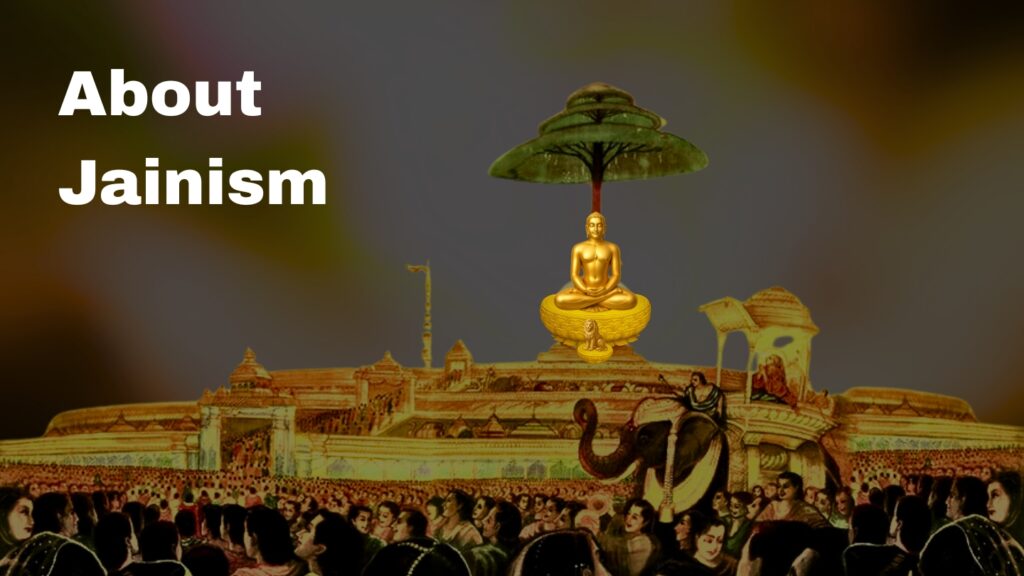
Episode 1 What Is Jainism? The Religion of Eternal Truth Words are few in this world, but their meanings are infinite.” With this, we begin our new series “Gagar Ma Sagar” (An Ocean in a Pot) — and in Episode 1, we explore: What is Jainism? Let’s start with a fact. Christianity makes up 31% of the global population. Islam 23%, atheists and secular groups 16%, Hindus 15%, Buddhists 7%, folk religions about 5.9%. All remaining religions fall within the remaining 1%. Jainism? It’s not even mentioned in these statistics. Yet, Jainism’s impact on the world is profound. Some of the world’s top universities teach Jain philosophy. In many global institutions, not only is Jainism taught, but students also walk barefoot like Jain monks, perform hair-shedding rituals (locha) during internships, and receive certifications and degrees based on their understanding of Jain values. Why such fascination with Jainism, especially after the recent pandemic? Because the timeless principles of Jainism—set forth over 2,500 years ago—remain deeply relevant today. When asked by Ishan Gandhi (Gandhiji’s grandson) about Jainism, famous philosopher George Bernard Shaw responded:“If I’m reborn, let it be into Jainism. That is my only wish.” From great thinkers to curious children, there is a rising interest in understanding what Jainism really is. What Is Religion? A Parable Let’s understand religion through a story. A man from China travels to India with his wife and child. As soon as he lands, his luggage is stolen—and in the chaos, he loses his wife and child too. With no money, phone, or family, he breaks down and rushes to the police station. Despite CCTV checks and multiple attempts, nothing works. In desperation, the police suggest, “Take the name of God. Go to a temple. Maybe pray.”He’s confused. “What is God? What is religion?” But he goes anyway—from temple to mosque to church—but finds no answers, only silence. Frustrated, he returns to the police. “Nothing is working!”The police say, “Have faith.” A kind passerby takes him to a Sadguru. The man shares his plight, “I just want to find my wife, child, and luggage. Can religion help?” The Sadguru replies:“Religion is not meant to find what’s lost. It helps you understand the truth.”“If you do good, good will come to you. If you do wrong, you’ll suffer—perhaps from a past life or this one.” The man admits he ran an unethical business exploiting widows and orphaned children. He asks for forgiveness and guidance. The Sadguru says:“If you want good for yourself, wish the same for everyone. If you desire peace, spread it. Good deeds will return good results.” He immediately decides to stop exploiting the poor and helps those he wronged. Soon after, a stranger safely returns his wife and child to him. Everything falls into place once he starts doing good. So, What Is Religion? Why Jainism? Because in Jainism, the foundation of all virtues is Satya (Truth). Jain means one who has conquered attachment and aversion (Raag-Dwesh).A Jain is someone who has destroyed all inner passions and desires. What remains is only truth—and that’s why Jainism is the religion of truth. Other religions may describe how to marry, how to be buried, or how to perform rites.Jainism talks beyond the body—it speaks of the soul.While science seeks truth, it doesn’t recognize the soul—so it cannot answer everything.Jainism begins with the soul and ends with the soul. That’s why it has the solutions to everything. Anyone Can Be Jain You don’t need to be born into Jainism to be Jain. A compassionate elephant once thought, “No one should suffer.” He protected a rabbit from being crushed under his feet. That elephant was reborn as Meghkumar, attained Kevalgyan (absolute knowledge), and finally Moksha (liberation). Not a monk. No spiritual teacher. Just a noble thought held until death—that’s Dharma. Another Example A sage named Tamli Tapasya practiced intense penance in the mountains for 60,000 years.Even celestial beings came and said, “Come be our king in the heavens.” But the sage replied,“Why should I seek a throne when I already possess the supreme self?”That alone made him Ekavatari (one birth away from liberation).He had no guru, no religious knowledge—just the pure pursuit of truth. Conclusion: Religion is not about actions, but about the virtues we live by.And Jainism is the path of the purest virtues—the truth of the soul.Anyone, anywhere, can walk this path. In the next episode, we will explore the core principles of Jainism. Stay tuned…